In the prairie, there are all sorts of places for creatures to hide. Fish dart among the underwater vegetation, snakes slither under a rock, mice hide amongst the grass. Even mammals, despite their often large sizes, can simply disappear into the tallgrass prairie. This September and October, we attempted to learn more about our mammal populations through a new to the Crane Trust survey : Snapshot USA. Hosted by the Smithsonian’s National Zoo and Conservation Biology Institute, Snapshot USA is a nation-wide camera trapping survey aimed at detecting mammal populations across the United States. Snapshot USA has existed since 2019, steadily growing each year to include more states and territories. Each September 1st through October 31st, Snapshot USA has documented various mammals across the US, from black bears to wolverines. Their remarkable photos they have captured since 2019 can be found on their website.
The protocol for Snapshot USA is relatively simple. To start, sixteen sites across Crane Trust property were identified as locations to set up our camera traps. Locations could be anything we were interested in, but they all had to be the same habitat type and setting. Some example habitat types are forest, grassland, and anthropogenic areas. For our habitat type, we chose to focus on sloughs, as they are a unique ecosystem type. Settings could either be urban, suburban, rural, or wild. Our sites fell within the rural category. Camera locations were required to be two-hundred meters away from one another, but within a two and a half kilometer radius. While meeting the distance requirements, we installed camera locations on sloughs of both Mormon and Shoemaker Islands, as we were interested in seeing if there was a difference in mammal populations between the areas.
Once sites had been determined, we were then ready to place the camera traps. Since there is a lack of trees to attach our cameras to in the prairie, we opted to place our camera traps on t-posts. This allowed us to place cameras anywhere with relative ease. Next, we would attach a camera to the t-post using the straps provided. After securing the camera, we would remove some of the tall vegetation in front of the camera to avoid unnecessary triggers. Then, after capturing a photo of either Clara or I to ensure the camera was functioning, the camera trap would be ready to go! Or so we thought…
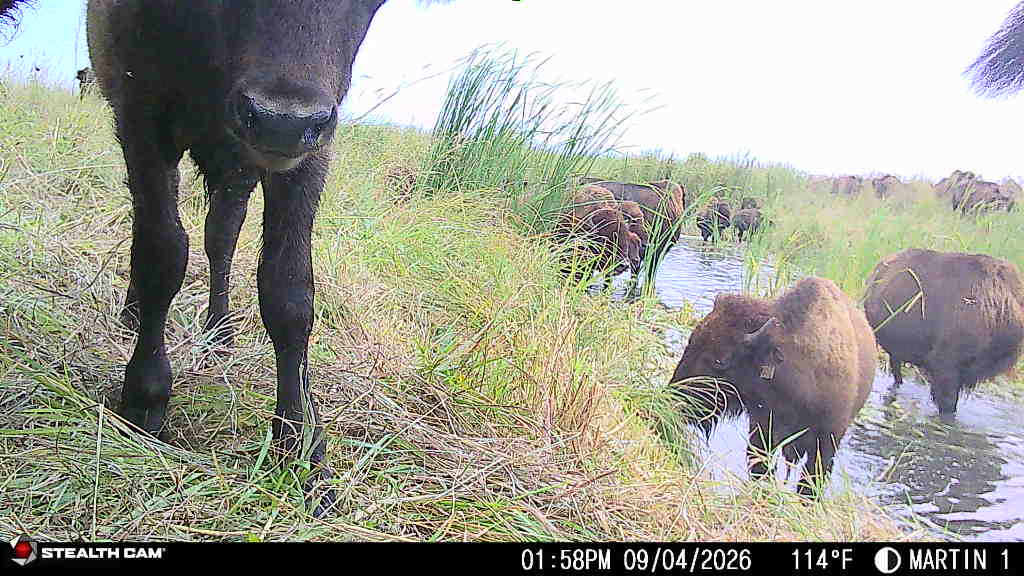
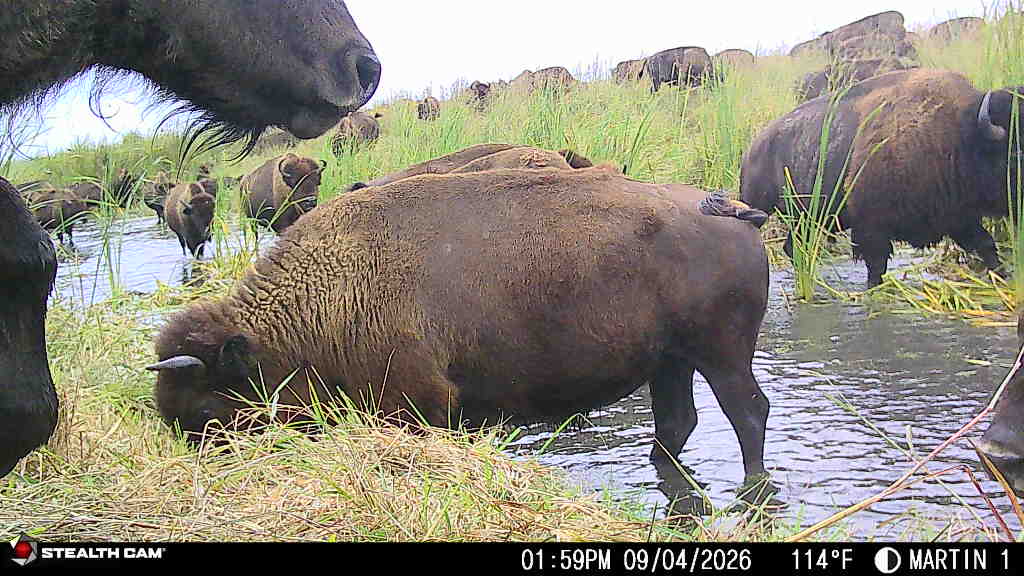
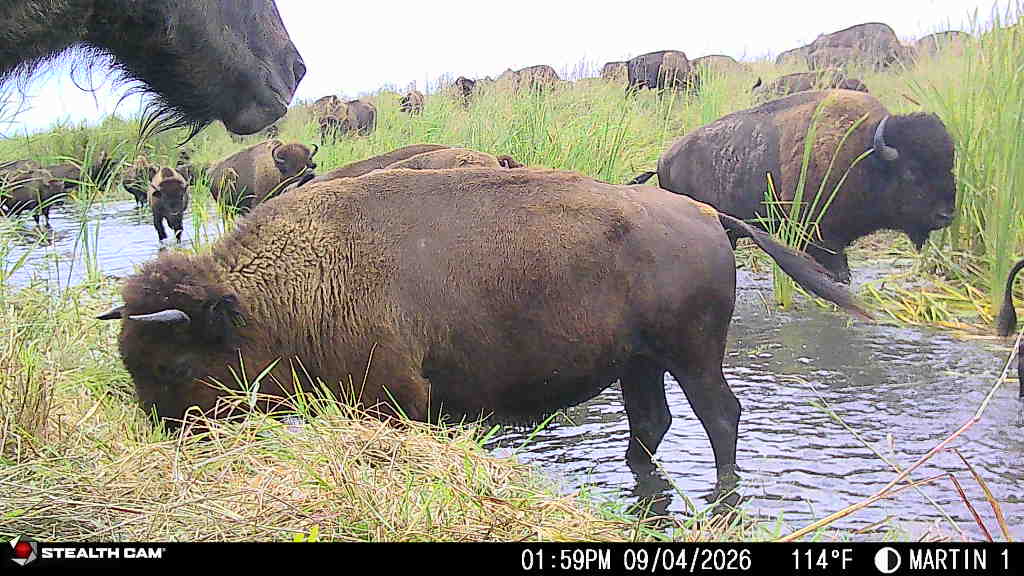
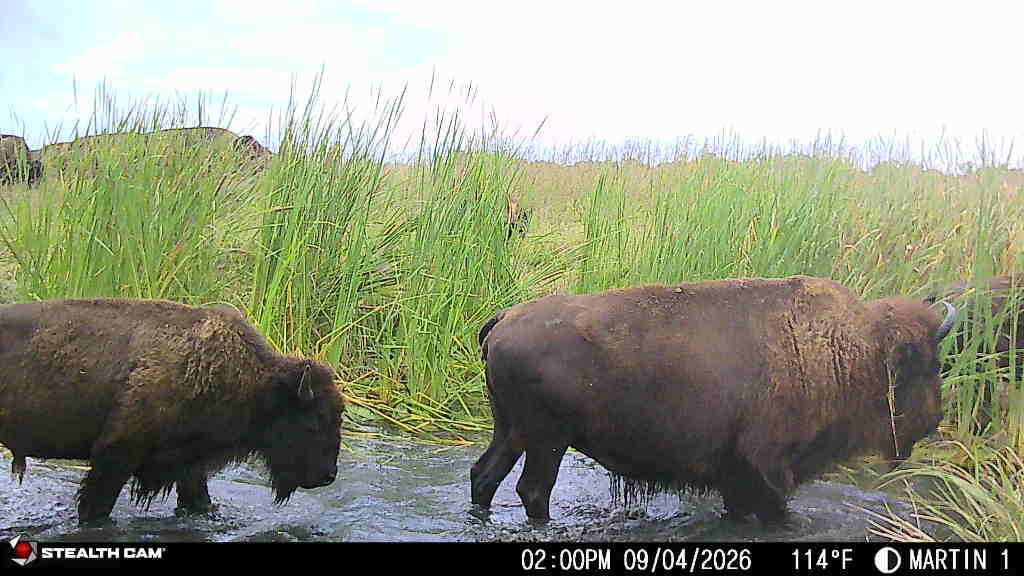
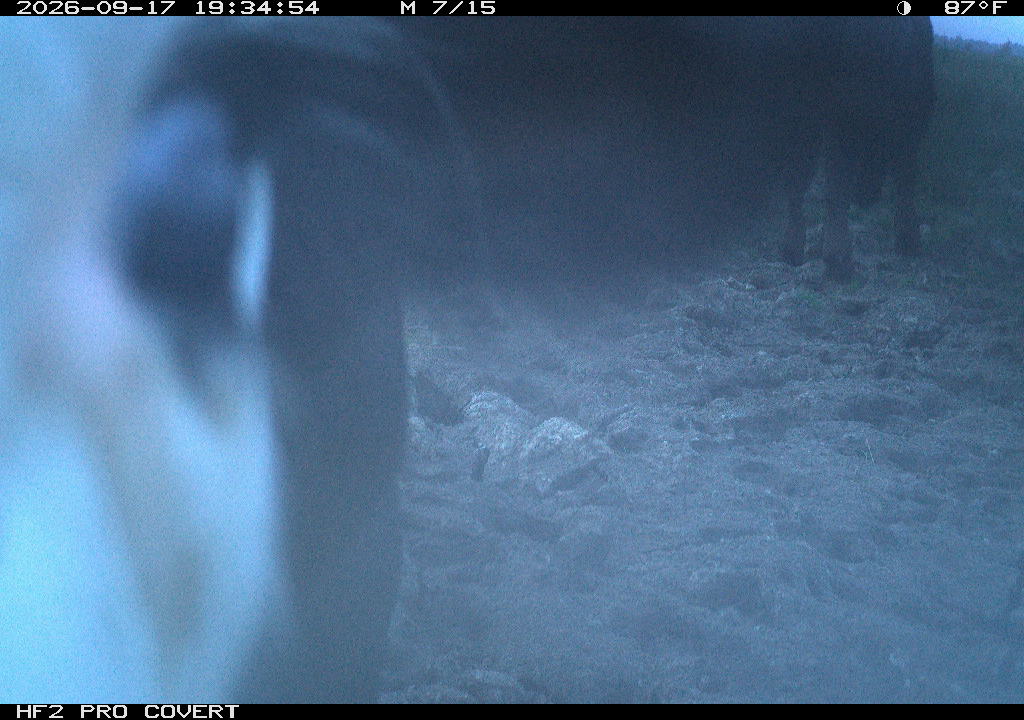
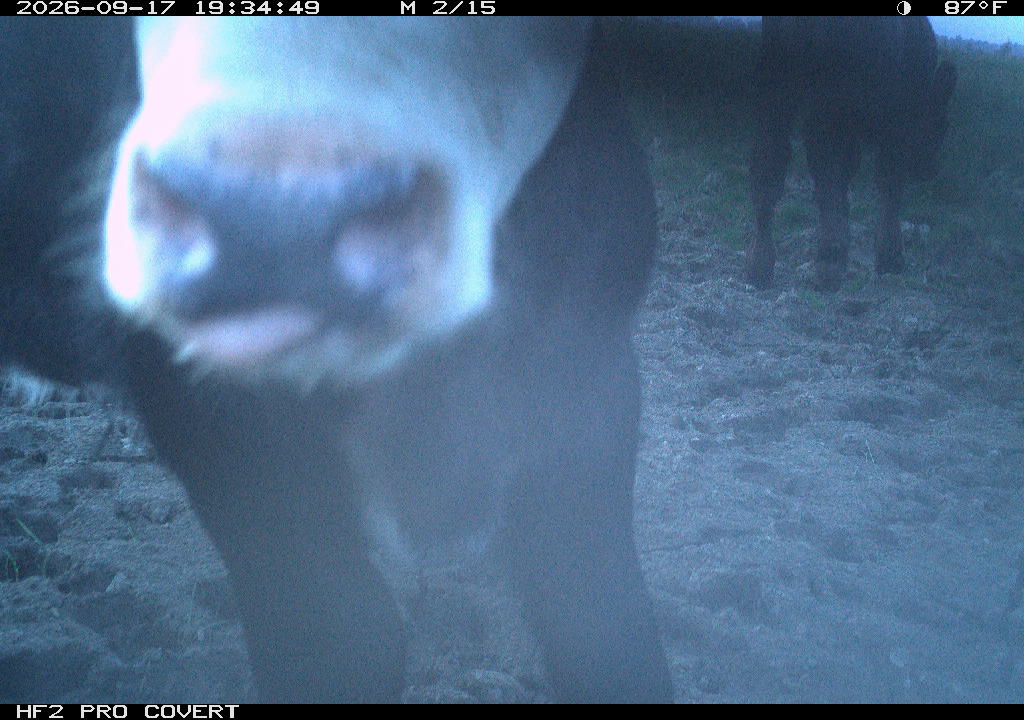
As it turns out, bison and cattle were very curious about our t-posts and camera traps. Unfortunately for us, they are both not the gentlest of creatures, requiring us to come up with a bison/cattle proofing solution. Luckily, we found some cattle panels lying around and built cages around our cameras to keep them facing the correct angle and direction.
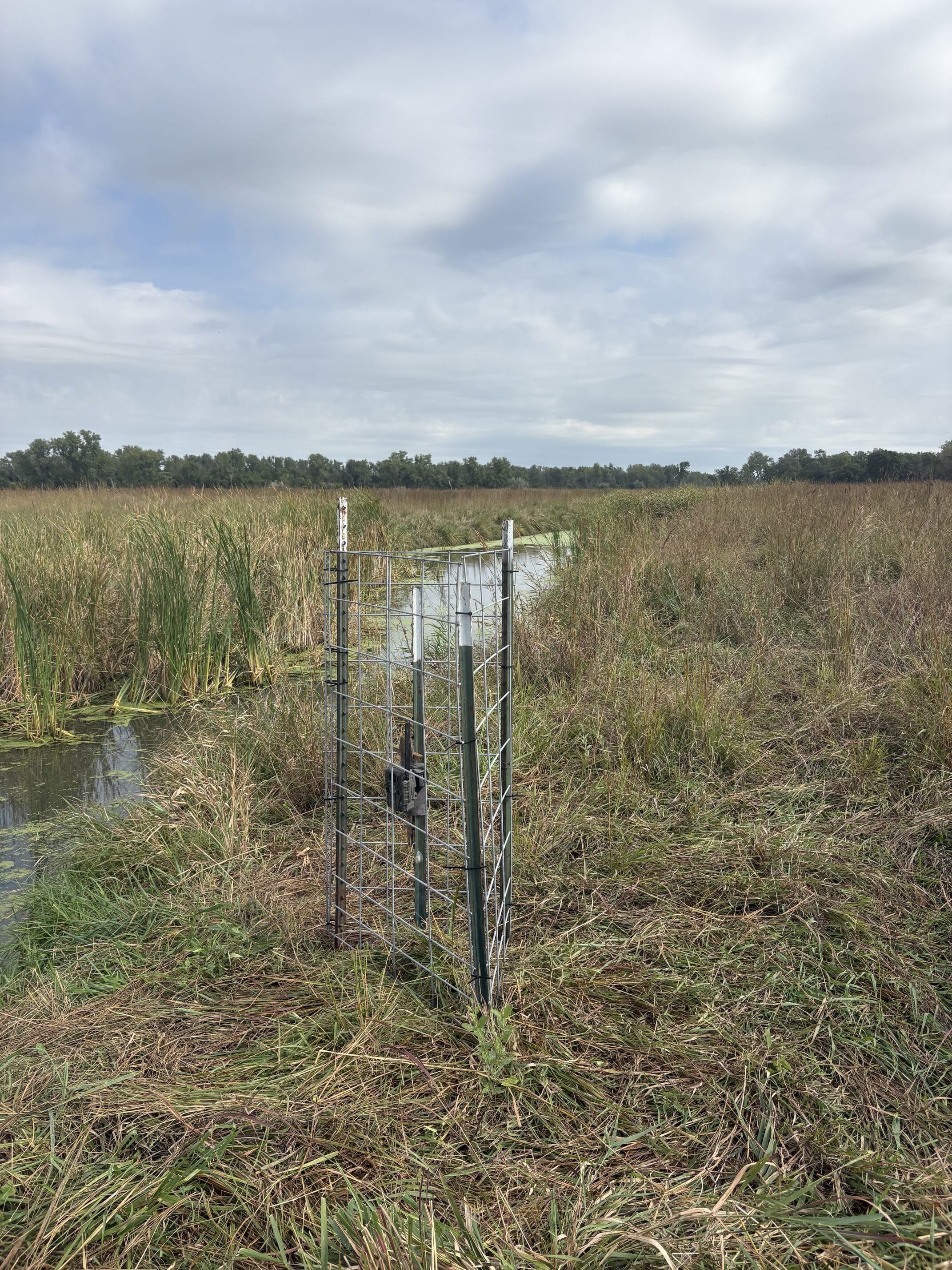
Once we solved our bison/cattle problems, we were off and thriving! Our cameras detected a total of thirteen different mammal species for the two months the traps were set out. Four of these species were a result of human influence on the landscape, those being cattle, our bison herd, and a rancher on horseback. The remaining mammals were North American raccoon (Procyon lotor), Virginia opossum (Didelphis virginiana), white-tailed deer (Odocoileus virginianus), North American beaver (Castor canadensis), mink (Neogale vison), coyote (Canis latrans), North American river otter (Lontra canadensis), bobcat (Lynx rufus), and striped skunk (Mephitis mephitis). Our most common wild species was white-tailed deer, which was found on almost all of our cameras across Crane Trust property. Our rarest mammal finds were a bobcat and North American river otter.
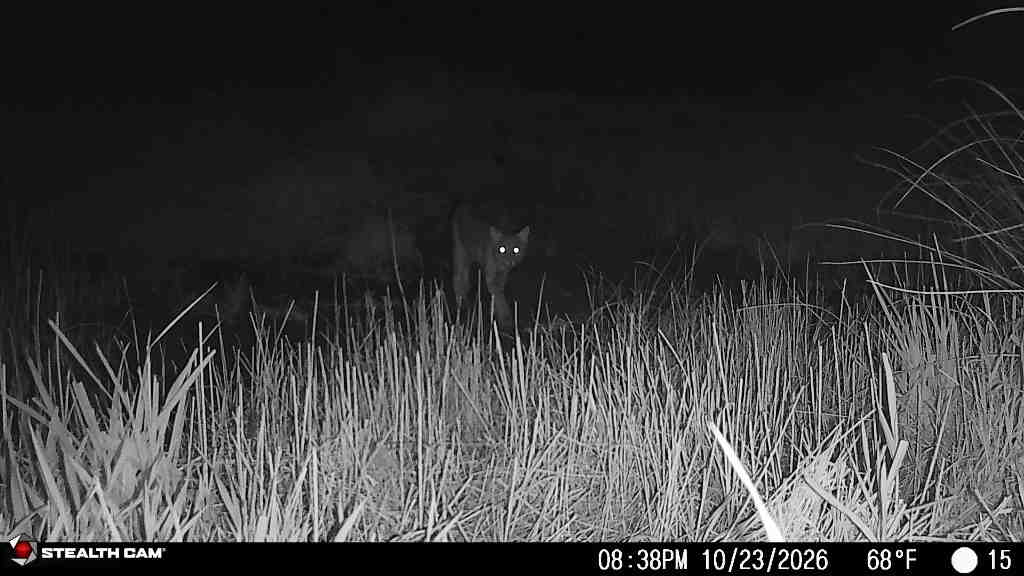
Bobcat (Lynx rufus)
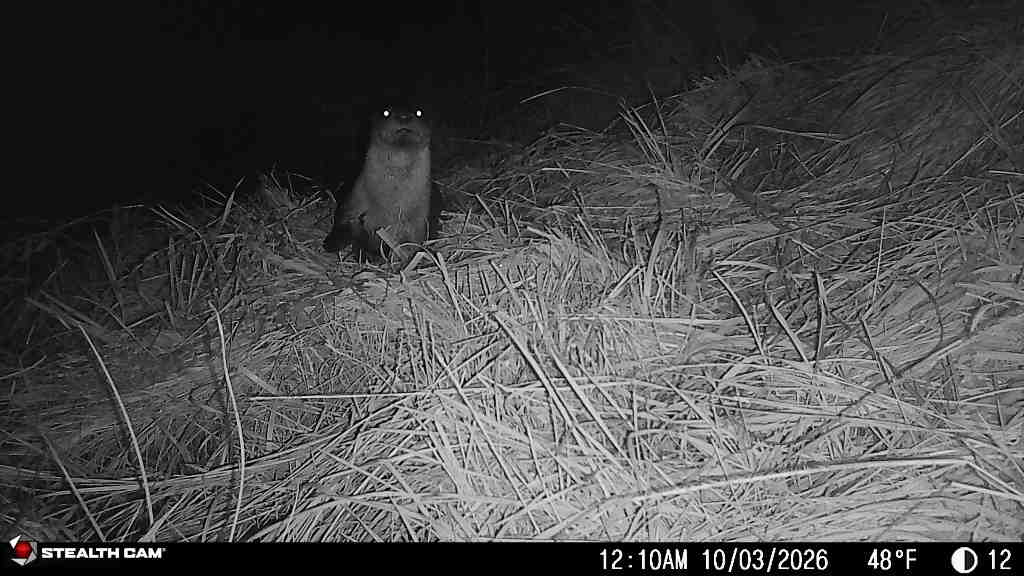
North American river otter (Lontra canadensis)
Our Snapshot USA cameras were not only successful at detecting mammal species. Numerous other wildlife species were detected during the survey period. Bird species such as Ring-necked Pheasants (Phasianus colchicus) and Western Meadowlarks (Sturnella neglecta) were seen frequenting our sloughs throughout the fall months. These species are fairly common, so it was no surprise that they appeared on our trail cameras. However, what we did not expect was to see several secretive marsh birds!
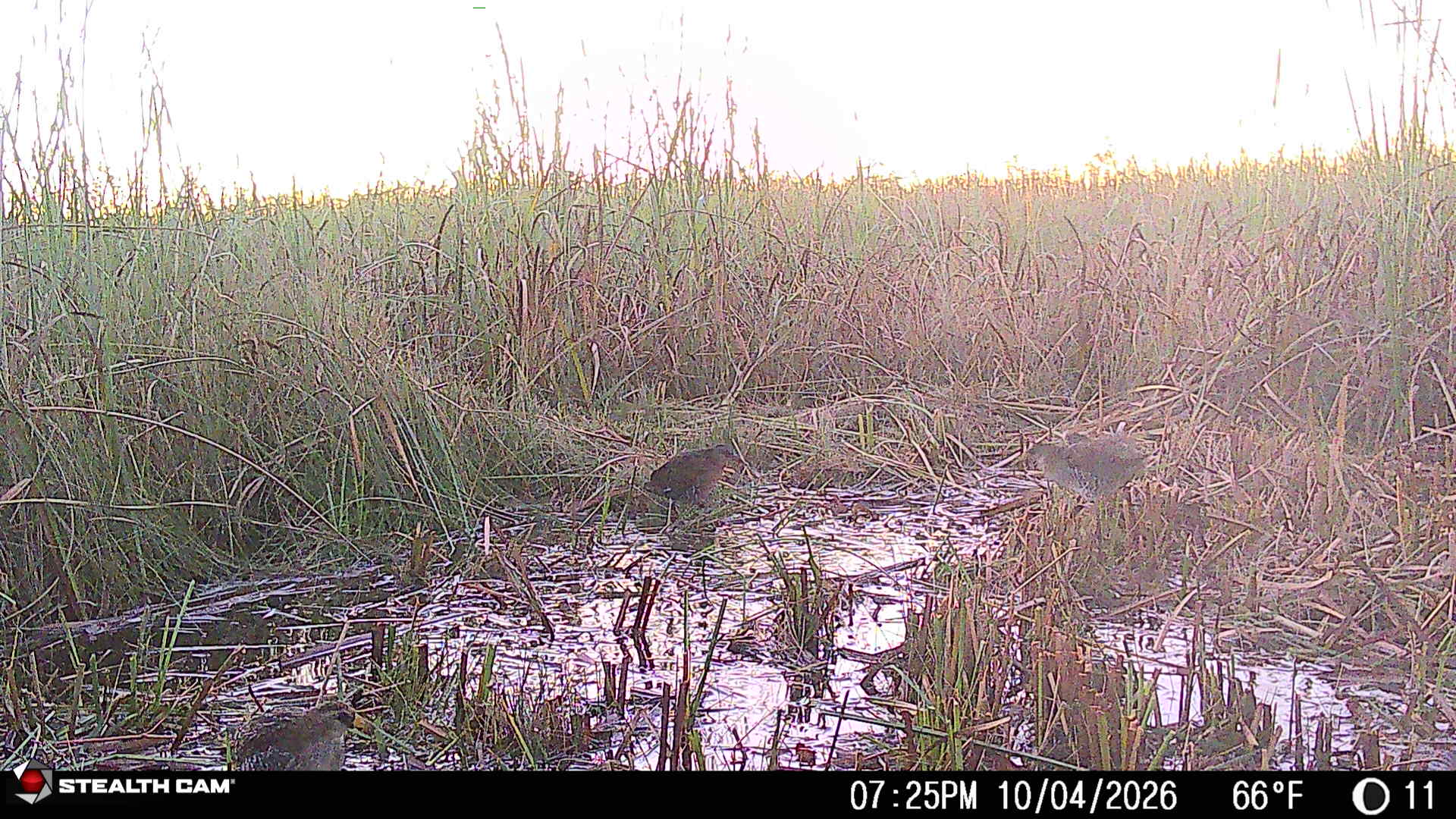
Sora (Porzana carolina, left) and Virginia Rails (Rallus limicola, center and right)
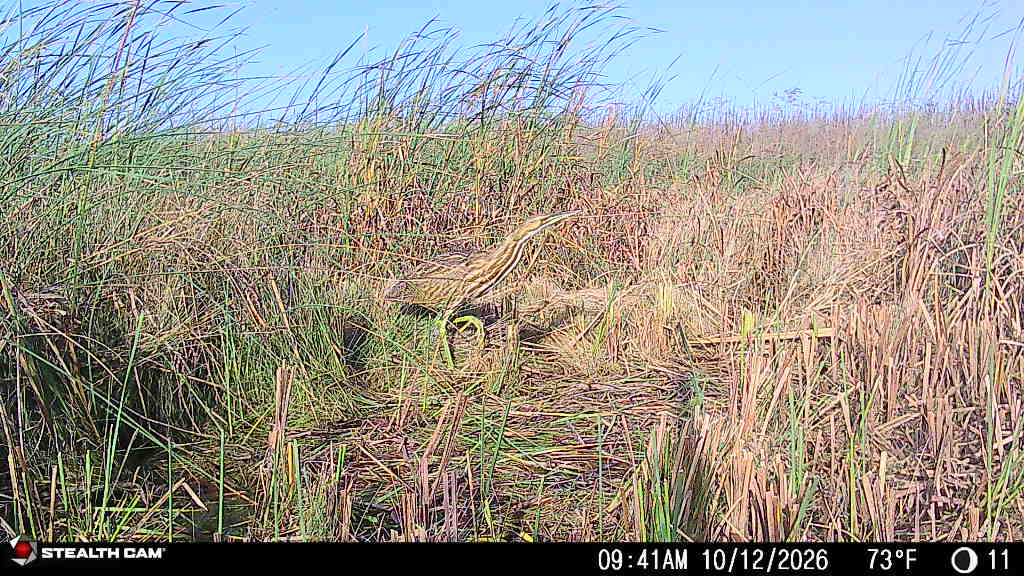
American Bittern (Botaurus lentiginosus)
As the name suggests, secretive marsh birds are rather difficult to locate. They can hide within some of the shortest patches of grass, standing so still it is nearly impossible to find them. During the summer months you may get lucky and hear one of their calls, but this is not the case during fall migration. As fall migrating birds have no need to attract mates or defend territory, most are silent as they fly about the prairie. This makes the chance of locating these elusive birds nearly nonexistent. While our camera traps were out, we detected Soras (Porzana carolina), American Bitterns (Botaurus lentiginosus), and Virginia Rails (Rallus limicola). Despite the low chances, the fall rains we received filled our sloughs, creating the perfect habitat for these secretive marsh birds to feed and roost.
Overall, Snapshot USAhad a very successful first year at the Crane Trust. We recorded many wildlife species from all different taxa, including several rare individuals. With this data gathered, we hope to continue Snapshot USA in future years. Who knows what else is hiding amongst the grasses of the tallgrass prairie!
William Hamson
Saunders Conservation Fellow